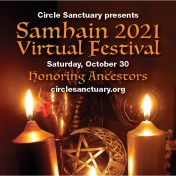
Join Selena Fox and Circle Sanctuary online on Saturday, October 30 for Samhain workshops and rituals, streamed to private YouTube Live, 1pm – 5:30pm central time zone. Register by October 27.
Looking for occult books that go into greater depth than the usual ones you find in mainstream bookstores? Here’s where to look, along with some tips on what to watch out for!
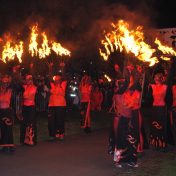
The Beltane Fire Society is hosting their annual April 30th festival online again this year due to the COVID pandemic. It’s free although donations are appreciated. For more details check https://beltane.org (Image “Beltane 09 – Fire Arch 2” by *Debs* is licensed under CC BY 2.0 )
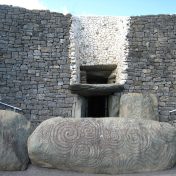
Another interesting way to celebrate Yule 2020 — watch the live-stream of Winter Solstice at Newgrange! https://www.irishpost.com/news/newgrange-monuments-magical-winter-solstice-to-be-live-streamed-across-the-world-199246 UPDATE: You can watch the recorded video at https://youtu.be/8anbIH-XfPU
Here’s what Circle Sanctuary is offering for Yule 2020 online in this year of the pandemic: YULE FESTIVAL 2020 ONLINESaturday, December 19, 10 AM – 1 PM Central Time Registration is open for this year’s Community Yule! Blessings, toasting, sharing and giving thanks during the Yuletide period is tradition and social distancing is making that hard for us this year. But… Read more »
Due to the ongoing COVID-19 pandemic a number of events have opted to shift to online celebrations instead of outright cancellations. Here’s a few that you might want to participate in! https://www.eventbrite.co.uk/e/samhain-online-ritual-tickets-123443507855 https://www.circlesanctuary.org/index.php/events/samhain-2020
This is another one of the topics that gets posted pretty regularly on occult and magickal discussion boards: “I think I’ve been cursed!” or “Don’t post pictures online or you’ll be cursed!” or some variation of those. Here’s the simple response: magick isn’t like Hollywood depicts — curses are actually very rare and it’s extremely unlikely you’ll ever encounter a… Read more »
I see it all the time on message boards and forums on the internet. “I want to be a Witch — how should I start?” It is pretty bewildering to newcomers because there is so much information out there, so many different “kinds” of Witches that someone who is just getting started can easily become overwhelmed. Here’s some advice from… Read more »
2020 has been a rather unusual year due to a global pandemic which has resulted in stay-at-home orders in many places, and all the usual public events being cancelled. Some, like the Beltane Fire Society in the UK, decided that this year they would hold their festival online instead of in the usual way. Even though the event is now… Read more »
Wicca is a pretty diverse religion today with assorted different denominations (usually called “traditions”), independent covens, and thousands if not millions of solitary practitioners around the globe. What exactly makes all of these practitioners Wiccan? Historically the religion of Wicca traces to Gerald B. Gardner who first promoted and taught a form of religious witchcraft as far back as the… Read more »